
Hot Tub Installation in Carbondale, CO: Complete Cost Guide
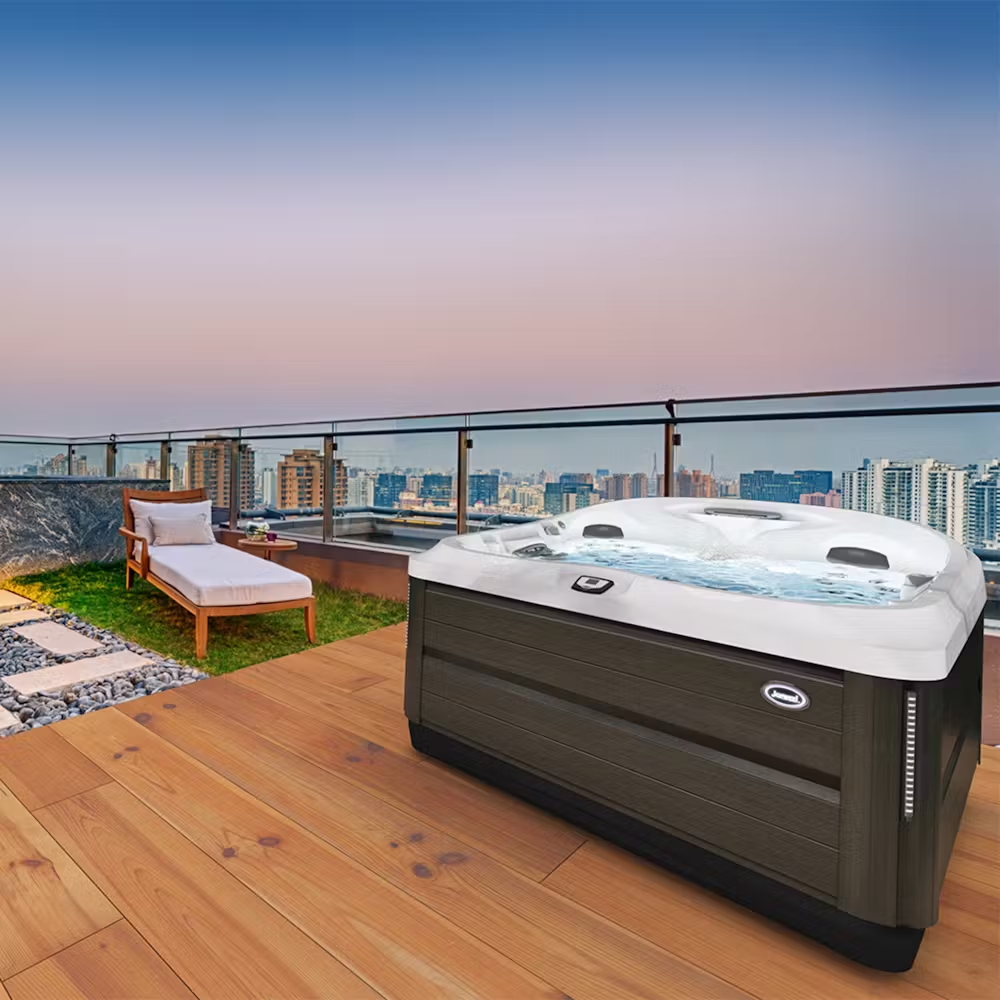
Hot tub installation in Carbondale, CO comes down to five cost drivers: the spa itself, delivery and placement, a level foundation, a dedicated electrical circuit, and permits. Site access and electrical work cause the biggest price swings. Electrical permits are issued by the State of Colorado, not the Town, so plan for both agencies.
This guide walks through each cost factor, the Town of Carbondale’s permit and inspection steps, and the foundation and electrical decisions that matter most at 6,181 feet. Use it to build a realistic budget before you schedule a site visit or request a quote.
How Much Does Hot Tub Installation Cost in Carbondale, CO?
Your total cost is the spa price plus the work needed to get it level, powered, permitted, and in place on your specific lot. Two homeowners who buy the same model can pay very different installation totals because of driveway access, the distance to the electrical panel, and whether a pad or deck has to be built.
| Cost factor | What it covers | What pushes it higher in Carbondale |
|---|---|---|
| Spa model | Seating capacity, jets, insulation, cover, and features | Larger tubs and premium insulation packages built for year-round mountain use |
| Delivery and placement | Moving the spa from the truck to its final spot | Steep driveways, tight side yards, stairs, fences, or a crane lift over the house |
| Foundation | Concrete pad, compacted base, or deck reinforcement | Sloped lots that need excavation or retaining work, and decks that need structural upgrades |
| Electrical | Dedicated circuit, disconnect, wiring run, and state permit | Long wire runs from the panel and older panels without spare capacity |
| Permits and inspections | Town and state permits for the work tied to the installation | Deck construction, which adds its own permit package and review |
For a firm number on your property, schedule a site visit so access, grade, and panel capacity can be checked in person.
What Makes a Carbondale Installation Different?
Carbondale sits at 6,181 feet, in Garfield County near the base of Mount Sopris. That setting shapes three parts of the project:
- Winter conditions: Freeze-thaw cycles move unprepared ground, so the foundation and drainage plan matter more than they would at lower elevations.
- Lot layout: Slopes, narrow gates, and long carries from the street affect both site prep and the delivery equipment needed.
- Jurisdiction: Properties inside town limits work with the Town of Carbondale Building Department. If your address is outside town limits, confirm which agency issues your permits before you apply.
Do You Need a Permit for a Hot Tub in Carbondale?
Plan on it. The Town of Carbondale requires a building permit to construct, enlarge, alter, or repair a structure, and it issues separate permits for plumbing and mechanical work. Electrical permits come from the State of Colorado. The Town adopted the 2021 building codes effective July 1, 2025.
Confirm the exact permits your project needs with the Building Department before work begins. A self-contained tub on a new concrete pad needs a different permit set than a tub going onto a new or modified deck.
How long does Carbondale’s permit review take?
The Town’s published review estimates list one day of administrative review and one to two weeks of building review for plumbing and mechanical permits. Incomplete applications, documentation errors, or staff absences can extend those times.
What does a deck permit require?
Deck projects use their own permit package. The Town’s deck documents include an Impervious Surface Calculations Table with a site plan example, a deck building handout based on the 2021 IRC, and a Homeowner Agreement for Permitting where applicable.
How do you submit and schedule inspections?
- Send all permit documents as PDF attachments in a single email, with the project address in the subject line.
- Confirm all work is complete before you request an inspection.
- Call the inspection line at 970-510-1210 the business day before the inspection you want. The Town asks that requests go to the Building Department line, not to the inspector directly.
- Whoever requests the inspection must accompany the inspector and complete any cited corrections before a re-inspection.
Concrete Pad, Gravel, or Deck: Which Foundation Is Best?
A reinforced concrete pad is the most dependable foundation for a hot tub used year-round in Carbondale. It stays flat through freeze-thaw cycles and gives the spa’s frame and shell uniform support. Always build to the pad specifications in your spa manufacturer’s installation guide.
A compacted gravel base can work for some models, but it can shift and settle over time. Uneven support stresses the shell and cabinet, and that wear shows up faster in a climate with repeated freezing and thawing.
A deck is a structural decision, not a placement decision. A filled hot tub with people in it concentrates far more weight than ordinary deck use, so have the deck’s capacity evaluated before the tub goes on it, and include the deck work in your permit plan. Whichever base you choose, route drainage away from the spa’s equipment bay so water can’t pool and freeze there.
What Electrical Work Does a Hot Tub Need?
Most full-size hot tubs are hardwired to a dedicated 240-volt, GFCI-protected circuit installed by a licensed electrician. Your model’s spec sheet lists the required amperage. Some smaller plug-and-play models run on a standard 120-volt outlet instead.
The National Electrical Code requires a maintenance disconnect within sight of the spa equipment and at least 5 feet horizontally from the tub’s inside wall, unless a fence, wall, or other permanent barrier separates them, as EC&M’s NEC Q&A explains. For a fuller look at wiring and clearances, see our guide to hot tub electrical requirements.
In Carbondale, remember the split: the electrical permit and its inspection go through the State of Colorado, while other permitted work goes through the Town.
How Does Carbondale’s Climate Affect Operating Costs?
Cold air, not altitude, drives most of your heating bill. Most hot tubs use electric heaters, and their workload depends on the gap between your water temperature and the outside air. Winter nights in the Roaring Fork Valley widen that gap.
- Insulation: Full-foam or high-density cabinet insulation slows heat loss through the sides of the tub.
- Cover fit: A thick, tight-sealing cover keeps heat in overnight. A waterlogged or warped cover makes the heater run longer.
- Placement: A spot sheltered from prevailing wind loses less heat than an exposed corner of the yard.
Why Work With a Local Roaring Fork Valley Installer?
A local installer knows how valley lots, winter weather, and Town and state permitting fit together, and is close by when the tub needs service. Ajax Pool & Spa has served the Roaring Fork Valley since 1993 from a 5,000 sq. ft. showroom in Basalt, just up Highway 82 from Carbondale. The team brings Certified Pool Operator expertise and has earned 13 Jacuzzi® International Design Awards.
You can compare Jacuzzi® hot tub models in the showroom, then let our team plan delivery, placement, and coordination with licensed contractors through our hot tub installation services. Learn more about how we serve Carbondale homeowners.
Frequently Asked Questions About Hot Tub Installation in Carbondale
How long does it take to get a hot tub permit in Carbondale?
For plumbing and mechanical permits, the Town of Carbondale estimates one day of administrative review followed by one to two weeks of building review. Deck work uses a separate permit package that can take longer, and the electrical permit comes from the State of Colorado. Incomplete or inaccurate applications are the most common cause of delays, so submit a complete package the first time.
Who issues the electrical permit for a hot tub in Carbondale?
The State of Colorado issues electrical permits for projects in Carbondale, not the Town’s Building Department. Your licensed electrician typically handles that permit and its inspection. Other permitted work tied to the project, such as plumbing, mechanical, or deck construction, goes through the Town of Carbondale.
Do I need to be present for a Carbondale building inspection?
The person who requests the inspection must accompany the inspector, and that person is responsible for completing any corrections the inspector cites before a re-inspection. If your contractor schedules the inspection, they take on that role. Requests go to the Building Department’s inspection line at 970-510-1210 the business day before.
Can I put a hot tub on gravel instead of concrete?
Some models allow a compacted gravel base, but a reinforced concrete pad is the stronger choice for year-round use in Carbondale. Gravel can shift and settle through freeze-thaw cycles, leaving the tub unevenly supported. Check your spa manufacturer’s installation guide, since it lists the foundation types and specifications that keep your warranty valid.
Does Carbondale’s altitude make a hot tub more expensive to run?
Not directly. Most hot tubs use electric heaters, and their energy use depends mainly on the difference between water temperature and outdoor air temperature. Cold winter nights, wind exposure, and a poorly fitting cover raise operating costs far more than elevation does. Good insulation and a tight cover are the most effective ways to keep winter bills in check.
Plan Your Carbondale Hot Tub Installation
A well-planned installation starts with an accurate look at your property. Call Ajax Pool & Spa at (970) 279-5253 or request a quote online, and we’ll help you choose the right spa and map out delivery, foundation, electrical, and permitting for your Carbondale home.