Knowing how to drain a hot tub fast is not nearly as important as knowing how to drain a hot tub properly. While draining the water is important for keeping the water clean, it is also crucial when it comes to preventing damages. By taking the time to drain the water and change it, an Aspen homeowner can avoid a number of long-term issues.
Corrosion is common when hot tubs are not drained on a consistent basis. The balance will be lost and no one wants to soak in dirty water that has not been taken care of properly. To learn about how to drain a hot tub, be sure to check out the following tips and pointers:
When To Drain Your Hot Tub
A hot tub has amazing self-cleaning properties but that does not mean that the owner will not need to change the water from time to time. The frequency at which the tub should be drained depends on the type of system that is being used. Traditional systems that rely on bromine or chlorine will need to have their water changed every three to four months.
Meanwhile, those who have a saltwater system can get away with less frequent hot tub draining. These systems can be drained on a yearly basis. To remain free of contamination, the Aspen homeowner must remain cognizant of the requirements for their specific system.
Draining Your Hot Tub
The process is simple, especially for those who have thought to place their hot tub adjacent to the drain where it was installed. Once the homeowner has decided to get started, there are a few steps that need to be taken, as it is time to gather the necessary equipment. A submersible pump is the best bet for any tub owner that does not want to go through the hassle of finding a garden hose long enough to reach the hot tub from the drain.
A spa shell cleaner and some clean rags are also required. It will take roughly an hour to drain the hot tub if the owner is using a drainage spigot. Those who want to drain a hot tub fast will want to obtain a submersible pump, which allows the tub to drain within ten minutes.
Does The Water Absolutely Have To Be Drained?
In a word, yes. Summer maintenance is absolutely essential to the long-term sustainability of the tub. Experts will recommend that the spa water be changed every three to four months. As chemicals are added to the water, they are going to start to dissolve more and more slowly. When this happens, the water becomes overly saturated, and the hot tub is not nearly as clean as it once was.
The chemistry of the water becomes imbalanced, and the hot tub can even begin to develop a scent. Since the hot tub is smaller than a pool, the more deodorant, lotion, sweat, and oil that gets left behind. None of this is going to be diluted very well, which causes the water to become cloudy and foamy. Added solids are also left behind as the water continues to evaporate, causing more long-term issues.
If the water is not drained during the summer months on a regular basis, the hot tub is not going to be clean or safe. Aspen homeowners must take the time to remove old and dirty water before it has the chance to start corroding the tub itself.
When Is It Time For a Change?
The water needs to be tested on a regular basis so that the proper balance can be maintained. Once the water has become consistently gritty or funky, this is a sure sign that it is time for a change. The frequency at which the spa is used also plays a key role. Divide the total number of gallons in the tub by three. From there, divide this number by the number of daily users. The answer to this formula tells homeowners how often to change the water, taking all of the guesswork out of the equation.
Aspen homeowners who have any further questions about the cleanliness of their hot tub and how regular draining can enhance their enjoyment are more than welcome to contact the good folks at Ajax Pool and Spa. These trained professionals are always on hand, ready to answer any questions or address any concerns that a tub owner may have!
It’s important to know how to balance the water in your hot tub. Learning how to lower alkalinity in a hot tub is easier than you might think. Once you learn how to achieve the desired level, it’s also easier to maintain it.
Alkalinity is the measurement of the water in your hot tub to determine how it is able to neutralize acids. A proper pH balance is critical so that you have the comfortable soaking environment that you have come to expect.
The alkalinity is sometimes referred to as the “buffer.” The reason for this is to ensure that your water is capable of resisting drastic changes in pH levels.
Test strips can be used to tell you what the alkalinity of the water is. Your goal should be to maintain it between 80-120 ppm.
Why is Lower Alkalinity Important?
If you have high alkalinity, you’ll notice problems with the cleanliness of your tub and the water itself. You might see scale forming along the sides, calcium buildup around the jets, and even cloudiness within the water.
In some instances, there may be so much calcium that you see yellowish flakes swimming around in the hot tub water.
A deep cleanse can help you to reverse any damage. However, if you’re not careful about pH levels, you can create a significant amount of damage that will affect overall functionality.
It’s important to note that you don’t want to lower your alkalinity too much, either. If it’s too low, the sanitizing solution you add to the water won’t be effective. The water may look a little green and it can even result in mold or mildew growth.
What Causes High Alkalinity?
Now that you know why high alkalinity is bad, you need to know what causes the PPM to go higher than desired.
Lotion, sweat, and other products you put on your body get dissolved into the water
Your water source may have a high alkaline rating
If you find that your alkalinity is constantly running on the higher side, it may also be a good idea to have a technician come out. We can run some diagnostic tests and help you with your weekly alkaline testing.
Tips on How to Lower Alkalinity in a Hot Tub
There are plenty of ways to test the alkalinity so that you know if it has to be lowered.
First, plan on testing the water in your hot tub when the water is hot. Test it one to two times a week based on usage. It doesn’t take long for the alkalinity of the water to change.
If you’re above 120 ppm, you’ll want to work on getting the alkalinity lowered. Otherwise, your pH levels could quickly become unstable.
Here are a few things that you can do to lower alkalinity:
Add sodium bisulfate to the water
Add muriatic acid to the water
Schedule a service appointment
The trick is to test, test, test. Additionally, you’ll want to know the basic details of your hot tub (total gallons, etc.) so that you can make the necessary calculations. You cannot simply drop in a pinch of sodium bisulfate or muriatic acid and hope that you’ve lowered the alkalinity sufficiently. Careful measurement will make all the difference – and deliver the best possible results.
Get Help with pH Levels and More
When you are struggling to maintain the desired pH levels or feel overwhelmed by the various chemicals that can go into your hot tub, call us. At Ajax Pool & Spa, we have technicians who can provide maintenance and offer guidance. Once we get your alkalinity lowered, you can enjoy your hot tub more.
There’s no reason to fight with your hot tub. We’ll set you up on a schedule so that we can come out to work with you on not only chemical levels but also overall hot tub maintenance.
Have you ever wondered how hot is a hot tub? It’s not so hot that you feel as though you’re being cooked from the outside in. The reality is that the hot tub temperature will vary based on what you’re comfortable with as well as what your health conditions may be.
Establish a Good Temperature
The hot tub temp that is right for you can be anywhere from 90 degrees all the way up to 104 degrees. 104 is considered the “maximum” temperature, so you’ll want to keep this in mind as you adjust the settings on your hot tub.
The US Consumer Product Safety Commission recommends that the water is best when it’s between 100 and 102 degrees.
Will that extra one or two degrees make a difference? Absolutely. While it might not seem like a lot, think about how you adjust the thermostat in your home. One degree can be the difference between comfortable and uncomfortable.
Start with a lower temperature. Sit inside of the hot tub and get acclimated to the hot tub temp for a few minutes. If it’s not warm enough, raise it by one degree. Continue to do this until you’ve reached a desirable temperature – but never above 104.
If you’re sharing the hot tub with everyone, find a temperature that works for everyone. It’s better to go with a lower number so that no one feels as though they’re getting too hot.
Remember, too, that as the temperatures get colder outside, you may find that you’ll want to increase the temperature by a degree or two.
Know the Rules
As you begin to set the temperature, it’s important to pay attention to a couple of the “rules” regarding temperatures.
If you’re pregnant, consult with a doctor before you get into the tub
Those under age 5 should not be in tubs above 95 degrees (and only remain in for 5 to 10 minutes)
Don’t stay in for more than 30 minutes
Additionally, to be sure you have the temperature in place that you think you have, be sure that you have a reliable thermometer. Many hot tubs will have a built-in thermometer. However, it’s a good idea to have a secondary one so that you have a check and balance in place.
When to Adjust the Temperature
So that you can enjoy the temperature of your hot tub throughout the year, and for all occasions, there are some things to consider.
If you’re using your hot tub for hydrotherapy, 100 degrees is a great starting temperature. It can help to improve blood flow, improve joint flexibility, and offer relief from arthritis pain.
If you’re looking to cool down on a hot summer day, drop the temperature to 98 degrees so that it’s less than your body temperature.
Additionally, consider lowering the temp a bit if you’re going to be stretching or doing yoga while in the tub or if you’re already overheated from a particular activity (or even an illness).
If you or anyone sharing the hot tub with you is heat-sensitive, drop the temperature. Then, work your way up until it’s comfortable for everyone.
Even on the hottest days of summer, you can still enjoy your hot tub. Just plan on setting the temperature to 95 degrees or lower.
Learn How to Maintain the Temperature
Maintaining the temperature is critical because you want to be able to get in whenever you want. If you have to wait to get the temperature to your desired setting, it can be problematic.
Most of today’s hot tubs have energy-efficient settings that allow you to maintain the temperature that you set. This allows you to have a “set it and forget it” mentality.
In order to be more energy-efficient, however, you want to do what you can to help the temperature be maintained.
Use a cover when the hot tub isn’t in use
Have your hot tub regularly serviced
Adjust settings based on the ambient temperature outside
When you need more help with determining the ideal temperature – or maintaining it, call us. We have technicians at Ajax Pool & Spa who can perform routine maintenance and talk to you about the ways that you can enjoy your hot tub all year long.
Throughout 2021, there’s been a chlorine shortage. This has hit hot tub owners, pool owners, and even pool supply stores. It can be quite problematic when you’re trying to maintain your hot tub or pool only to find out that you can’t get your hands on any chlorine.
There’s some good news, though. There are ways to reduce the amount of chlorine that you need. Further, it’s important to know what is causing the chlorine shortage.
Reasons Why There’s a Chlorine Shortage
Throughout the COVID-19 pandemic, there’s been a significant demand for pools…and with that, comes the need for pool chemicals. As theatres, theme parks, and more closed, people began using their pools with greater frequency. And those who didn’t have pools were having them built.
With greater usage and more pools that need chlorine, a shortage was inevitable.
Usage wasn’t the only reason for the shortage, however.
A fire occurred at a chemical plant (BioLab) in Lake Charles, Louisiana in August of 2020. This facility was one of the largest producers of chlorine tablets in the nation. This was due to Hurricane Laura bringing in high winds and falling power lines that led to the fire. Approximately 835 tons of product were consumed in the fire. It also led authorities to tell residents to stay indoors and close their windows so that they didn’t inhale the toxic fumes that were being emitted from the burning plant.
With the inability to produce more chlorine, it led to many pool suppliers suffering a shortage. Many exhausted all of their supplies and found that there was no more to be had regardless of what company they called.
In a U.S News & World Report article, the president of Dover Pools, Chris Anderson explained that there were so many new requests for pools that they have orders scheduled all the way through 2022. “People rediscovered their backyard and got creative, and (pool companies) became No. 1 on their conscience.”
With the amount of chlorine still in high demand, it’s also resulting in a price surge – and the cost has jumped approximately 58% in 2021 over 2020 prices.
How to Deal with the Chlorine Shortage
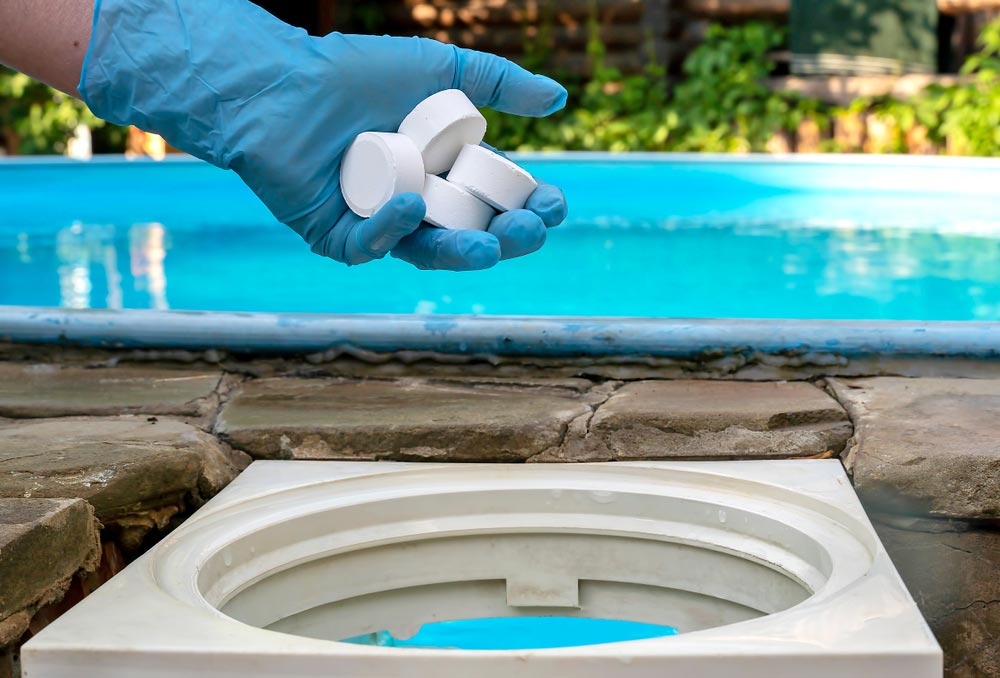
First, it’s important to know that the chlorine shortage is temporary. You should only buy what you actually need to get you through the season. For the average spa or pool owner, that would be a single bucket of 3-inch chlorine tablets. Especially as the prices have skyrocketed, there simply is no reason to stockpile the chlorine.
Understand that there are solutions.
Chlorine is just one of the ways to sanitize your water. You can also explore algaecide, though it tends to be more expensive and less effective.
Some homeowners have turned to using bleach – and this is a bad idea for a number of reasons. The strength of chlorine is minimal – and there are often other dangerous additives that you don’t want to breathe or swallow as you play inside of a pool or soak inside of a hot tub.
One of the main reasons chlorine is used is to sanitize. The good news, particularly with hot tubs, is that there is a new technology that will help you to sanitize the water without any chemicals. This is known as “shocking” the water, which can be done with a UV sterilizer or an Ozonator.
Additionally, if you don’t want to mess with the chemicals and pay the extra costs for chlorine (when you can find it), there’s an alternative. Convert your pool or hot tub to a saltwater system. This reduces the need for a number of chemicals and chlorine is generated on its own within the system.
Get Help with Maintaining Your Hot Tub or Pool in Aspen
At Ajax Pool & Spa, we offer the service and maintenance support that you need. This includes providing repairs and helping you manage your chemicals. We deliver the chemicals you need right to your door – and when there’s a shortage of one chemical (such as chlorine), we can show you how to manage your pool or spa in other ways.
Call us now to schedule a member of our service team out to your home in the Aspen area.