What is the Best Swimming Pool Filter System?
Now that summer is upon us and everyone is looking to get outside to take a dip, it is time to take a closer look at the best swimming pool filter systems. This choice may seem complicated to Aspen homeowners, but this cheat sheet is here to help.
After all, this is not a decision that can or should be taken lightly. Think of a pool filter in the same manner that you would a kidney. Without this helpful filtration device, the pool would be chock-full of algae and all sorts of other forms of debris.
When it comes time to make a choice, don’t make the all-too-common mistake of selecting the option that is the least expensive. Easy cleaning, simple maintenance and the ability to trap all contaminants are the main factors that need to be considered. In order to make the right choice, Aspen homeowners must first have a firm grasp on all of their options.
Be sure to consult with the professionals at Ajax Pool and Spa if you have any additional questions or concerns. Their team of experts is more than happy to help!
Pool Filter Types
Before we can get into specific filters, you must first learn more about each type. There are three different types for each homeowner to select from: sand, cartridge, and diatomaceous earth. In most instances, those who are looking to keep costs lower will rely on sand filters. It’s great for larger pools because it does not require much maintenance and will not clog as easily as other options.
Homeowners who use sand filters have to be more cognizant of potential concerns, though. Sand particles are rough around the edges, causing long-term damage. The filter becomes less efficient, as the particles that are trapped within the sand start to build up inside of it. Adding a pressure gauge to the side of the filter wall and remaining on top of the pool chemistry is of the utmost importance.
Cartridge filters, on the other hand, are a bit pricier than sand filters but they are considered to be very low maintenance. As long as you do not own a huge pool, they tend to be rather effective. They are energy-efficient, inexpensive and very easy to maintain. Instead of dealing with the same backwashing process that takes place with sand filters, the cartridge is removed from the tank and sprayed down with a hose.
Last but not least, the diatomaceous earth option is the most expensive and time-consuming from a maintenance standpoint. This is because they are able to filter out the smallest particles of all. The specialized powder that is used for the D.E. option can easily be added through the pool skimmer and there is no need for harmful chemicals during the cleaning process.
Now, let’s have a closer look at the specific filters that are best for each client…..
Above Ground Pools
Carvin Laser Sand Filter
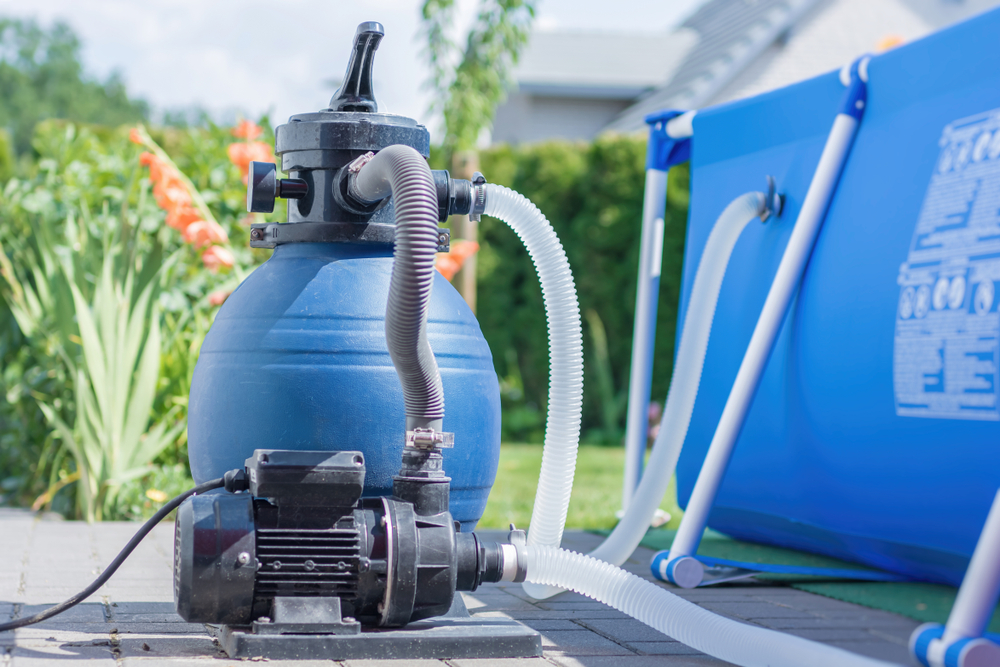
These filters rely on sand that is naturally abrasive as a means of keeping the pool sparkling clean. Water is drawn evenly across the surface, which allows for a much higher flow rate and better filtering. Backwashing is also handled in a more efficient manner. The sand will need to be replaced every five years, but this is a small price to pay. These filters can handle the needs of pools up to 21,000 gallons in size.
Easy Maintenance
Hayward StarClear Plus
This cartridge pool filter does not require a sizable amount of maintenance and will have your pool looking its best all summer long. All you need to do is provide occasional rinses when the filter is being replaced. The lid is bolt-free as well, allowing homeowners to successfully maintain their filters without the usual struggles. In-ground pools with a capacity of up to 30,000 gallons can benefit from the Hayward StarClear Plus.
Best DE Filter
Hayward EC40AC Perflex
DE filtration offers homeowners exceptionally fine filtration and the Hayward EC40AC Perflex is no different in this regard. Maintenance and cleaning are very convenient, giving pool owners the chance to enjoy superior filtration without all of the usual hassles. Residual dirt and debris are not given the opportunity to accumulate, and it is easy to purge the tubes as necessary. Strong return jets, less friction and less frequent attention…. what’s not to like?
Small Pools
Intex 1000 GPH Krystal Clear
Smaller pools need filters, too. That’s why these filters are the best choice for homeowners who are looking to care for a pool that has 6,000 gallons or less. 1,000 gallons are circulated each hour and Intex Type A filter cartridges are used. It is easy to install and works very well, especially for those who own above-ground pools.